Wednesday, July 25, 2018

Adient PLC (ADNT) Expected to Post Quarterly Sales of $4.36 Billion

Brokerages expect Adient PLC (NYSE:ADNT) to post sales of $4.36 billion for the current quarter, according to Zacks. Three analysts have issued estimates for Adient’s earnings, with the highest sales estimate coming in at $4.46 billion and the lowest estimate coming in at $4.27 billion. Adient reported sales of $4.02 billion in the same quarter last year, which would suggest a positive year-over-year growth rate of 8.5%. The firm is scheduled to announce its next quarterly earnings report before the market opens on Thursday, July 26th.

On average, analysts expect that Adient will report full-year sales of $17.39 billion for the current year, with estimates ranging from $17.19 billion to $17.51 billion. For the next year, analysts expect that the firm will report sales of $17.58 billion per share, with estimates ranging from $17.31 billion to $17.75 billion. Zacks’ sales averages are a mean average based on a survey of sell-side analysts that follow Adient.

Get Adient alerts:

Adient (NYSE:ADNT) last released its quarterly earnings data on Thursday, May 3rd. The company reported $1.85 earnings per share (EPS) for the quarter, missing the consensus estimate of $1.89 by ($0.04). The company had revenue of $4.60 billion for the quarter, compared to the consensus estimate of $4.39 billion. Adient had a net margin of 0.98% and a return on equity of 16.65%. The company’s quarterly revenue was up 9.4% on a year-over-year basis. During the same quarter in the previous year, the business earned $2.50 EPS.

ADNT has been the topic of several research reports. Zacks Investment Research cut shares of Adient from a “hold” rating to a “strong sell” rating in a research report on Monday, July 16th. TheStreet cut shares of Adient from a “c-” rating to a “d+” rating in a research report on Thursday, July 12th. UBS Group reduced their price target on shares of Adient from $83.00 to $73.00 and set a “buy” rating on the stock in a research report on Tuesday, June 19th. They noted that the move was a valuation call. JPMorgan Chase & Co. reduced their price target on shares of Adient to $50.00 and set an “underweight” rating on the stock in a research report on Tuesday, June 12th. Finally, Morgan Stanley cut shares of Adient from an “overweight” rating to an “equal weight” rating and set a $61.00 price target on the stock. in a research report on Wednesday, May 9th. Four research analysts have rated the stock with a sell rating, seven have given a hold rating and two have issued a buy rating to the stock. The stock has an average rating of “Hold” and an average target price of $68.83.

Adient opened at $46.43 on Friday, Marketbeat Ratings reports. The company has a market cap of $4.53 billion, a PE ratio of 4.97, a P/E/G ratio of 0.67 and a beta of -0.52. The company has a current ratio of 1.04, a quick ratio of 0.86 and a debt-to-equity ratio of 0.80. Adient has a 1 year low of $46.24 and a 1 year high of $86.42.

The firm also recently declared a quarterly dividend, which will be paid on Wednesday, August 15th. Investors of record on Wednesday, July 18th will be given a $0.275 dividend. This represents a $1.10 annualized dividend and a yield of 2.37%. The ex-dividend date is Tuesday, July 17th. Adient’s dividend payout ratio is presently 11.76%.

A number of hedge funds and other institutional investors have recently bought and sold shares of ADNT. Elkfork Partners LLC purchased a new position in Adient during the fourth quarter worth $195,000. Jane Street Group LLC purchased a new position in Adient during the first quarter worth $210,000. Johnson Financial Group Inc. boosted its stake in Adient by 449.1% during the first quarter. Johnson Financial Group Inc. now owns 3,668 shares of the company’s stock worth $219,000 after buying an additional 3,000 shares during the period. Hsbc Holdings PLC purchased a new position in Adient during the first quarter worth $255,000. Finally, Brinker Capital Inc. boosted its stake in Adient by 20.6% during the first quarter. Brinker Capital Inc. now owns 7,473 shares of the company’s stock worth $447,000 after buying an additional 1,274 shares during the period. 97.68% of the stock is owned by institutional investors.

Adient Company Profile

Adient plc designs, manufactures, and markets a range of seating systems and components for passenger cars, commercial vehicles, and light trucks. The company operates through two segments, Seating and Interiors. The Seating segment produces automotive seat metal structures and mechanisms, foams, trims, fabrics, and seat systems.

See Also: Earnings Per Share

Get a free copy of the Zacks research report on Adient (ADNT)

For more information about research offerings from Zacks Investment Research, visit Zacks.com

Saturday, July 21, 2018

Limelight Networks, Inc. (LLNW) Expected to Announce Earnings of $0.03 Per Share

Wall Street brokerages forecast that Limelight Networks, Inc. (NASDAQ:LLNW) will report earnings per share of $0.03 for the current quarter, according to Zacks Investment Research. Four analysts have made estimates for Limelight Networks’ earnings. The highest EPS estimate is $0.04 and the lowest is $0.02. Limelight Networks posted earnings per share of $0.02 in the same quarter last year, which would indicate a positive year over year growth rate of 50%. The company is scheduled to report its next quarterly earnings report on Wednesday, October 17th.

According to Zacks, analysts expect that Limelight Networks will report full-year earnings of $0.15 per share for the current financial year, with EPS estimates ranging from $0.13 to $0.17. For the next financial year, analysts forecast that the business will post earnings of $0.20 per share, with EPS estimates ranging from $0.14 to $0.22. Zacks’ EPS calculations are an average based on a survey of research firms that follow Limelight Networks.

Get Limelight Networks alerts:

Limelight Networks (NASDAQ:LLNW) last released its earnings results on Thursday, July 19th. The information services provider reported $0.04 earnings per share for the quarter, beating the consensus estimate of $0.03 by $0.01. Limelight Networks had a negative net margin of 2.16% and a positive return on equity of 1.50%. The firm had revenue of $50.25 million during the quarter, compared to analyst estimates of $49.64 million. During the same quarter in the previous year, the firm earned $0.03 earnings per share. The firm’s revenue for the quarter was up 10.8% compared to the same quarter last year.

Several analysts have weighed in on the stock. Zacks Investment Research upgraded shares of Limelight Networks from a “hold” rating to a “strong-buy” rating and set a $5.75 target price for the company in a research note on Wednesday, June 20th. ValuEngine upgraded shares of Limelight Networks from a “buy” rating to a “strong-buy” rating in a research note on Wednesday, May 2nd. BidaskClub lowered shares of Limelight Networks from a “hold” rating to a “sell” rating in a research note on Tuesday, June 12th. DA Davidson reiterated a “buy” rating on shares of Limelight Networks in a research note on Monday. Finally, Cowen reiterated a “buy” rating and set a $6.50 target price on shares of Limelight Networks in a research note on Friday. One investment analyst has rated the stock with a sell rating, one has issued a hold rating and five have given a buy rating to the company’s stock. The stock presently has a consensus rating of “Buy” and an average target price of $5.95.

LLNW stock traded up $0.45 during trading on Friday, hitting $5.15. 4,069,200 shares of the company’s stock traded hands, compared to its average volume of 1,063,521. Limelight Networks has a 52 week low of $3.12 and a 52 week high of $6.05. The firm has a market cap of $523.40 million, a price-to-earnings ratio of -257.50, a PEG ratio of 59.13 and a beta of 2.33.

In other news, CEO Robert A. Lento sold 40,000 shares of the company’s stock in a transaction dated Monday, July 2nd. The shares were sold at an average price of $4.46, for a total transaction of $178,400.00. The transaction was disclosed in a document filed with the Securities & Exchange Commission, which is available at this link. Also, Director Jeffrey T. Fisher sold 52,500 shares of the company’s stock in a transaction dated Tuesday, April 24th. The stock was sold at an average price of $4.96, for a total transaction of $260,400.00. The disclosure for this sale can be found here. Insiders have sold 453,076 shares of company stock valued at $2,303,281 in the last 90 days. Insiders own 10.60% of the company’s stock.

Several institutional investors have recently added to or reduced their stakes in LLNW. BlackRock Inc. lifted its holdings in Limelight Networks by 1.7% in the first quarter. BlackRock Inc. now owns 7,051,038 shares of the information services provider’s stock worth $28,980,000 after purchasing an additional 116,844 shares during the period. Hood River Capital Management LLC lifted its holdings in Limelight Networks by 67.6% in the first quarter. Hood River Capital Management LLC now owns 5,801,635 shares of the information services provider’s stock worth $23,845,000 after purchasing an additional 2,339,680 shares during the period. Dimensional Fund Advisors LP lifted its holdings in Limelight Networks by 3.5% in the first quarter. Dimensional Fund Advisors LP now owns 3,827,837 shares of the information services provider’s stock worth $15,732,000 after purchasing an additional 130,168 shares during the period. Renaissance Technologies LLC lifted its holdings in Limelight Networks by 18.5% in the fourth quarter. Renaissance Technologies LLC now owns 2,970,655 shares of the information services provider’s stock worth $13,101,000 after purchasing an additional 462,800 shares during the period. Finally, JPMorgan Chase & Co. lifted its holdings in Limelight Networks by 33.3% in the first quarter. JPMorgan Chase & Co. now owns 2,167,381 shares of the information services provider’s stock worth $8,908,000 after purchasing an additional 540,889 shares during the period. Institutional investors and hedge funds own 70.57% of the company’s stock.

About Limelight Networks

Limelight Networks, Inc provides content delivery and related services and solutions in the Americas, Europe, the Middle East, Africa, and the Asia Pacific. The company offers services and solutions for businesses to deliver their digital content across Internet, mobile, and social channels. It provides Orchestrate Platform, a suite of integrated services comprising content delivery, video content management, Website and Web application acceleration, Website and content security, and cloud storage services.

Recommended Story: Book Value Per Share �� BVPS

Get a free copy of the Zacks research report on Limelight Networks (LLNW)

For more information about research offerings from Zacks Investment Research, visit Zacks.com

Earnings History and Estimates for Limelight Networks (NASDAQ:LLNW)

Friday, July 20, 2018

Why Rewalk Robotics (RWLK) Stock Is Skyrocketing Today

Rewalk Robotics (NASDAQ:RWLK) had a good day as the company’s stock was skyrocketing following a revision to the company’s national policies from the U.S. Department of Veterans Affairs (VA)

Rewalk Robotics (RWLK) Source: Defense

The Israel-based company said that the aforementioned agency issued a revision to the company’s national policy regarding its exoskeleton medical device training and procurement for qualifying Veterans with spinal cord injury (SCI). The new policy includes additional guidance throughout the evaluation process of this treatment.

Plus, the announcement also means that more veterans will have access to Rewalk Robotics training program locations across the VA network, as well as expanded access to private rehabilitation centers through the company’s Veterans Choice Program.

The new policy was issued back in June 2018 and it is an update to the company’s standard operating policy (SOP) that was issued by the VA in December 2015. The new evaluation process will now include access to all veterans for one of the 24 designated spinal cord injury VA centers (SCI/D).

Once a veteran is determined to be qualified for training and procurement of his or her own exoskeleton system, each individual may have the option of pursuing training in one of three ways: at an applicable SCI/D hub center, at a qualified VA hospital designated by the VA’s “hub & spoke” program, or at a qualified private rehabilitation center through the VA’s Veterans Choice Program, which is a program through which Veterans can receive care from a community provider that’s paid for by the VA.

RWLK stock went absolutely gangbusters on Friday as shares were up about 69.5% by mid-afternoon today following the news.

Compare Brokers

Thursday, July 19, 2018

Samsung Will Spend $9 Billion in 2019 to Add NAND Flash Memory Production Capacity

DigiTimes, citing South Korean newspaper Chosun Ilbo, said that�Samsung�(NASDAQOTH:SSNLF) is set to spend $9 billion on capital expenditures related to NAND flash memory manufacturing in 2019. This figure, the report says, is an increase from the roughly $6.4 billion it will spend in 2018.�

First, let's go over capital expenditure basics so that you know what this means broadly. Then, I'll try to explain what it means for investors in Samsung, as well as other NAND flash memory makers.

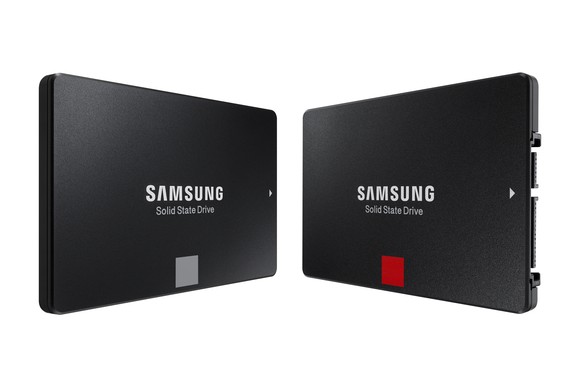
Samsung solid state drives based on its NAND flash.

Image source: Samsung.

More capital, more capacity

Manufacturing memory chips requires companies to invest substantial amounts of money up front in factories and equipment. Broadly speaking, the more that a company spends on capital expenditures, the more manufacturing capacity they're ultimately putting in.

So, Samsung reportedly upping its NAND flash capital expenditure for 2019 to $9 billion from $6.4 billion in 2018 means that the company aims to bring more NAND flash manufacturing capacity online. This essentially tells us that Samsung expects demand to grow significantly.

On the surface, that sounds good, right? Well, not so fast.

The risk of oversupply

DigiTimes cited analysts with IC Insights, who "warned of overspending by major NAND suppliers in a recent analysis." In fact, they reportedly observed that NAND flash pricing has come down in early 2018, and that those price declines could accelerate during the second half and persist through next year.

The problem is that Samsung isn't the only company boosting its NAND flash production capacity to supply the expected higher demand. The major manufacturers apparently "all plan to ramp up dramatically their 3D NAND flash capacities over the next couple of years," according to DigiTimes.

The report then goes on say that IC Insights "believes that the risk for significantly overshooting 3D NAND flash market demand is very high and growing."

Oversupply is a bad thing for suppliers

In a situation where there's more installed NAND flash memory capacity than there is demand at current prices, market forces dictate that NAND flash pricing will come down. What generally doesn't happen in this space is suppliers cutting production significantly.

The reason is simple. All of them are spending a ton of money to build manufacturing capacity, and they want to keep their factories running at high utilization rates. (Low utilization rates reduce margins significantly.) So, instead of easing off on production and dealing with the financial impact of low factory utilization, they start cutting prices to spur demand for their products.

Lowering pricing is also deleterious to gross profit margins, but it can often be the lesser of two evils. In either case, though, net profits come down.

This risk of oversupply is precisely why memory makers need to be mindful of both the overall demand environment as well as what competitors might do to meet it when deciding how much capacity to put in.

Who benefits?

While a NAND oversupply is something that manufacturers dread, it's something that their customers will enjoy. NAND flash is used in many applications, from data centers to smartphones, so lower prices mean better margins for their products.

For example, one company that's probably excited about a ton of NAND flash capacity being installed is Apple (NASDAQ:AAPL)--� it buys substantial quantities of NAND flash for its iPhones, iPads, Macs, and other products.

"We feel that for NAND [flash], we're going to be turning the corner very soon ," Apple CFO Luca Maestri said on the company's earnings call back in May.

You can bet that Apple's peers, as well as many other companies, would be glad to see NAND flash prices continue to soften.

Monday, July 16, 2018

Twenty-First Century Fox Inc Class B (FOX) Holdings Lowered by Fjarde AP Fonden Fourth Swedish Natio

Fjarde AP Fonden Fourth Swedish National Pension Fund trimmed its position in Twenty-First Century Fox Inc Class B (NASDAQ:FOX) by 6.1% in the 2nd quarter, according to the company in its most recent Form 13F filing with the Securities and Exchange Commission (SEC). The firm owned 127,801 shares of the company’s stock after selling 8,283 shares during the quarter. Fjarde AP Fonden Fourth Swedish National Pension Fund’s holdings in Twenty-First Century Fox Inc Class B were worth $6,297,000 at the end of the most recent quarter.

Several other institutional investors and hedge funds have also recently made changes to their positions in the business. Federated Investors Inc. PA lifted its position in shares of Twenty-First Century Fox Inc Class B by 41.9% in the first quarter. Federated Investors Inc. PA now owns 6,939 shares of the company’s stock worth $252,000 after purchasing an additional 2,050 shares in the last quarter. Ffcm LLC purchased a new stake in shares of Twenty-First Century Fox Inc Class B in the first quarter worth approximately $274,000. Quantitative Systematic Strategies LLC purchased a new stake in shares of Twenty-First Century Fox Inc Class B in the first quarter worth approximately $277,000. Commerzbank Aktiengesellschaft FI purchased a new stake in shares of Twenty-First Century Fox Inc Class B in the first quarter worth approximately $332,000. Finally, OLD Mission Capital LLC purchased a new stake in shares of Twenty-First Century Fox Inc Class B in the fourth quarter worth approximately $334,000. Institutional investors own 24.06% of the company’s stock.

Get Twenty-First Century Fox Inc Class B alerts:

Separately, ValuEngine raised shares of Twenty-First Century Fox Inc Class B from a “hold” rating to a “buy” rating in a research report on Wednesday, May 23rd. Three research analysts have rated the stock with a buy rating and one has given a strong buy rating to the company’s stock. Twenty-First Century Fox Inc Class B presently has a consensus rating of “Buy” and an average target price of $43.00.

Twenty-First Century Fox Inc Class B opened at $47.19 on Monday, according to Marketbeat.com. The company has a quick ratio of 1.65, a current ratio of 2.05 and a debt-to-equity ratio of 0.91. The company has a market capitalization of $87.42 billion, a PE ratio of 26.81 and a beta of 1.26. Twenty-First Century Fox Inc Class B has a 52-week low of $24.30 and a 52-week high of $49.65.

Twenty-First Century Fox Inc Class B (NASDAQ:FOX) last issued its quarterly earnings data on Wednesday, May 9th. The company reported $0.49 earnings per share for the quarter. The firm had revenue of $7.42 billion for the quarter. Twenty-First Century Fox Inc Class B had a net margin of 13.76% and a return on equity of 17.50%.

Twenty-First Century Fox Inc Class B Company Profile

Twenty-First Century Fox, Inc, together with its subsidiaries, operates as a diversified media and entertainment company primarily in the United States, the United Kingdom, Continental Europe, Asia, and Latin America. It operates through Cable Network Programming, Television, and Filmed Entertainment segments.

Recommended Story: Understanding Relative Strength Index

Want to see what other hedge funds are holding FOX? Visit HoldingsChannel.com to get the latest 13F filings and insider trades for Twenty-First Century Fox Inc Class B (NASDAQ:FOX).

Institutional Ownership by Quarter for Twenty-First Century Fox Inc Class B (NASDAQ:FOX)

Tuesday, July 10, 2018

Top Energy Stocks To Invest In 2019

tags:NTC,EXR,MNTX,

Donald Trump wants to increase the amount of corn ethanol blended with gasoline, while eliminating the primary incentive for blending corn ethanol with gasoline.

That, at least, is my major takeaway from Mr. Trump's most recent economic policy speech. The media has focused on Mr. Trump's pledge during the speech to achieve U.S. GDP growth of 4% per year if he is elected to the White House in November. (The Republican nominee clearly didn't hire the braintrust at Oxford Economics to calculate this target.) Energy investors should pay closest attention to his comments on the revised Renewable Fuel Standard (RFS2), however, as they change the outlook for a number of companies in the event that he is inaugurated in January.

First, it should be noted that this is not a purely academic exercise. Mr. Trump's decision to stop engaging in high-profile spats with Gold Star parents and start (mostly) focusing on policy issues has reaped his campaign dividends in the polling numbers. He is now just 1 point behind rival Hillary Clinton in a 4-way national race, according to the RealClearPolitics poll of polls, and surging support in swing states now has the betting markets giving him better odds than at any time since May. Nate Silver over at FiveThirtyEight gives Mr. Trump a 40% chance of becoming the next U.S. president, high odds given the nominee's incredibly unorthodox campaign.

Top Energy Stocks To Invest In 2019: Nuveen Connecticut Premium Income Municipal Fund(NTC)

Advisors' Opinion:
  • [By Logan Wallace]

    Media stories about Nuveen Connecticut Premium Income Mun Fd (NYSE:NTC) have trended very positive recently, Accern Sentiment Analysis reports. The research firm identifies negative and positive news coverage by monitoring more than 20 million news and blog sources in real time. Accern ranks coverage of companies on a scale of -1 to 1, with scores closest to one being the most favorable. Nuveen Connecticut Premium Income Mun Fd earned a news sentiment score of 0.53 on Accern’s scale. Accern also gave news stories about the investment management company an impact score of 47.4041994466706 out of 100, meaning that recent news coverage is somewhat unlikely to have an impact on the stock’s share price in the next few days.

Top Energy Stocks To Invest In 2019: Extra Space Storage Inc(EXR)

Advisors' Opinion:
  • [By Shane Hupp]

    Oppenheimer Asset Management Inc. reduced its stake in Extra Space Storage (NYSE:EXR) by 10.3% in the first quarter, HoldingsChannel.com reports. The fund owned 13,051 shares of the real estate investment trust’s stock after selling 1,502 shares during the period. Oppenheimer Asset Management Inc.’s holdings in Extra Space Storage were worth $1,140,000 as of its most recent filing with the Securities and Exchange Commission (SEC).

  • [By Logan Wallace]

    Lee Financial Co lifted its stake in Extra Space Storage (NYSE:EXR) by 100.0% in the 1st quarter, according to the company in its most recent 13F filing with the Securities and Exchange Commission (SEC). The fund owned 2,100 shares of the real estate investment trust’s stock after purchasing an additional 1,050 shares during the quarter. Lee Financial Co’s holdings in Extra Space Storage were worth $183,000 as of its most recent filing with the Securities and Exchange Commission (SEC).

  • [By Stephan Byrd]

    Extra Space Storage, Inc. (NYSE:EXR) hit a new 52-week high and low during trading on Tuesday . The company traded as low as $93.95 and last traded at $93.32, with a volume of 318074 shares changing hands. The stock had previously closed at $93.44.

Top Energy Stocks To Invest In 2019: Manitex International Inc.(MNTX)

Advisors' Opinion:
  • [By Logan Wallace]

    Get a free copy of the Zacks research report on Manitex International (MNTX)

    For more information about research offerings from Zacks Investment Research, visit Zacks.com

  • [By Ethan Ryder]

    Manitex International Inc (NASDAQ:MNTX) hit a new 52-week high during mid-day trading on Tuesday . The stock traded as high as $12.95 and last traded at $12.61, with a volume of 655 shares changing hands. The stock had previously closed at $12.94.

Saturday, July 7, 2018

Future-Proof Companies For Long-Term Investing

In 1988, my father brought home a new LaserDisc player. It cost a good chunk of our savings, but he was convinced that this would be the next evolution in home theater to replace VHS. He had already bet wrong on Betamax earlier in the decade but was sure that this new format was the real deal.

---Recommended Link---

Just Released... THE LIST: Top 7 Growth Stocks To Buy Now
Our annual research has produced winners of 310%, 452%, and even 569% in years past. Last year's picks are beating the S&P 500 3-to-1. And this year's report could be the most profitable yet... If you're tired of paltry gains, then this could be the most important thing you read all year. Click here to see it.

Of course, the format never did find its market, and manufacturers stopped printing movies for it just a few years later.

While my family��s struggle with technological obsolescence is nothing new, it seems the problem has gotten more acute for investors over the past several decades. Once leading companies are being pushed aside and bankrupted as their industries die out or they fail to adapt.

How can a long-term investor hope to make money if there��s no safety in their best-of-breed, long-term investments?

The answer is in finding future-proof industries -- segments of the economy that won��t get replaced by technology or industries that will benefit from it.

Time Makes Fools of Us All -- Even Investors

That constant threat of technological obsolescence isn��t just a problem for consumers but for investors as well. The pace of technological change seems to be quickening. (Think of how quickly Blockbuster Video and Borders fell out of favor.) Sometimes it��s the entire industry that dies out and sometimes it��s just companies that fail to adapt.

As streaming takes a larger share of the industry, recorded music sales have plunged more than 40% since 2000, according to the International Federation of the Phonographic Industry. Music stores have tried to delay the inevitable by expanding their product offering to include novelty items and apparel, but it won��t be long before these stores are a thing of the past.

The slow death of traditional retail over the past few years has resulted in vacant malls and struggling department stores. Even rising consumer spending and a strong economy hasn��t been able to save once valuable brands like Sears and Toys R Us.

Of course, sometimes it��s the jobs within an industry that are lost or changed. For example, more than 67% of millennials are purchasing their insurance directly from companies rather than going to an agent.

The problem for investors is that a long-term strategy of investing in best-of-breed companies won��t save them from the march of change. IBM once dominated all things tech but failed to adapt to the cloud revolution. Even Warren Buffett -- the man whose favorite holding period is "forever" -- has given up on Big Blue.

Future-Proof Industries... Plus, 3 Best-Of-Breed Stocks

Investing in the era of change means looking to industries that are either safe from technological change or will benefit from it.

People have been drinking beer for more than 4,000 years and it��s difficult to imagine a technology that could replace it. Other liquors may be a substitute, but there will always be a market for fermented suds.

Ambev S.A. (NYSE: ABEV) owns and distributes some of the most popular global brands and holds a commanding share in many of its markets. It's the world��s third-largest brewer, controlling more than 68% of the market in Brazil, Argentina, and Bolivia. Shares pay an attractive 4.3% dividend yield and trade at 20 times forward earnings.

The company has been under pressure lately on weakness in Brazil, but volumes in the second and third quarters should be up significantly thanks to the World Cup matches. Recent volume weakness has been partially offset by stronger profitability with the EBITDA margin expanding by 1.6% in the latest quarter.

The trucking industry may actually be a beneficiary of the evolution in technology with driverless trucks curing the worker shortage that is forcing wages higher. Higher fuel prices and regulations are weighing on the industry now, but transportation is here to stay.

While several high-profile accidents involving automated cars has set the progress back, automation is already a reality in trucking. An Anheuser-Busch truck made a 120-mile delivery in 2016 with the driver sitting in the cabin instead of behind the wheel. Another truck made a 2,400 mile cross-country trip this year with only rare disengagements that required the driver take over.

Knight-Swift Transportation Holdings (NYSE: KNX) is 24% lower from its March high as enthusiasm over self-driving vehicles has come down, but that won��t stop the technological change from happening. Driver costs as a percentage of total costs are among the highest in the industry after the merger of Knight Transportation and Swift Transportation in 2017.

The merger created one of the largest operators in the full-truckload segment. Costs should come down gradually as the consolidation process wraps up but the real benefit will come as the company adopts an ever-automated fleet. Earnings are expected to be 67% higher over the next four quarters (estimated at $2.31 per share for 2018), for a forward PE of just 16.5.

Aerospace & Defense may evolve to need fewer workers, but it's another sector that should hold up against technological change. President Trump proposed a defense budget of $886 billion for fiscal 2019 and a creation of the proposed "space force" could balloon that well past $1 trillion. The budget has grown at a 6% annual pace since 2000 and shows no signs of slowing.

General Dynamics (NYSE: GD) is diversified across the Aerospace & Defense sector with 25% of sales in information technology, followed by aerospace orders (24%), marine systems (23%), combat systems (16%), and mission systems (12%). The acquisition of CSRA makes it one of the largest IT contractors to the U.S. government.

The increasing defense budget could make General Dynamics a cash flow machine with $2.5 billion -- 4.4% of the company's market cap -- returned to investors through buybacks and dividends over the past four quarters. Shares trade for 17 times forward earnings, and the company has a solid balance sheet with $4.3 billion in cash.

Risks To Consider: The nature of technological change makes it difficult to predict, and these industries could still be at risk. Investors need a diversified portfolio around sectors and industries that can stand the test of time.

Action To Take: Future-proof your portfolio by investing in best of breeds within industries immune from technological change or that can evolve with it.

Editor's Note:�"$859.13... $494.54... $708.71... "
Imagine walking out to your mailbox and seeing a string of checks like these. These are real amounts that Judith M. of McHenry, Illinois, has been cashing. She doesn't work an extra job for them. In fact, she only puts in about 10 minutes a month. And these checks keep rolling in, month after month, year after year. Once you start, you'll see the checks starting to fill your own mailbox. Click here to learn how.

Thursday, July 5, 2018

Reviewing Kona Grill (KONA) & Yum! Brands (YUM)

Kona Grill (NASDAQ: KONA) and Yum! Brands (NYSE:YUM) are both retail/wholesale companies, but which is the superior business? We will compare the two businesses based on the strength of their earnings, analyst recommendations, risk, institutional ownership, valuation, dividends and profitability.

Profitability

Get Kona Grill alerts:

This table compares Kona Grill and Yum! Brands’ net margins, return on equity and return on assets.

Net Margins Return on Equity Return on Assets
Kona Grill -12.80% -94.61% -11.63%
Yum! Brands 25.60% -17.70% 21.14%

Dividends

Yum! Brands pays an annual dividend of $1.44 per share and has a dividend yield of 1.8%. Kona Grill does not pay a dividend. Yum! Brands pays out 48.6% of its earnings in the form of a dividend.

Risk & Volatility

Kona Grill has a beta of 0.26, suggesting that its stock price is 74% less volatile than the S&P 500. Comparatively, Yum! Brands has a beta of 0.86, suggesting that its stock price is 14% less volatile than the S&P 500.

Institutional & Insider Ownership

13.5% of Kona Grill shares are owned by institutional investors. Comparatively, 74.1% of Yum! Brands shares are owned by institutional investors. 31.5% of Kona Grill shares are owned by company insiders. Comparatively, 0.6% of Yum! Brands shares are owned by company insiders. Strong institutional ownership is an indication that hedge funds, large money managers and endowments believe a stock will outperform the market over the long term.

Valuation & Earnings

This table compares Kona Grill and Yum! Brands’ revenue, earnings per share (EPS) and valuation.

Gross Revenue Price/Sales Ratio Net Income Earnings Per Share Price/Earnings Ratio
Kona Grill $179.08 million 0.19 -$23.43 million N/A N/A
Yum! Brands $5.88 billion 4.28 $1.34 billion $2.96 26.30

Yum! Brands has higher revenue and earnings than Kona Grill.

Analyst Ratings

This is a breakdown of recent recommendations for Kona Grill and Yum! Brands, as reported by MarketBeat.

Sell Ratings Hold Ratings Buy Ratings Strong Buy Ratings Rating Score
Kona Grill 0 2 1 0 2.33
Yum! Brands 0 10 13 0 2.57

Kona Grill currently has a consensus target price of $3.75, indicating a potential upside of 50.00%. Yum! Brands has a consensus target price of $85.68, indicating a potential upside of 10.08%. Given Kona Grill’s higher probable upside, equities analysts clearly believe Kona Grill is more favorable than Yum! Brands.

Summary

Yum! Brands beats Kona Grill on 11 of the 14 factors compared between the two stocks.

Kona Grill Company Profile

Kona Grill, Inc. owns and operates upscale casual restaurants under the Kona Grill brand name. As of December 31, 2017, it owned and operated 46 restaurants in 23 states of the United States and Puerto Rico; and 3 franchised restaurants in Mexico, the United Arab Emirates, and Canada. The company is based in Scottsdale, Arizona.

Yum! Brands Company Profile

YUM! Brands, Inc., together with its subsidiaries, develops, operates, and franchises quick service restaurants worldwide. It operates in three segments: the KFC Division, the Pizza Hut Division, and the Taco Bell Division. The company operates restaurants under the KFC, Pizza Hut, and Taco Bell brands, which specialize in chicken, pizza, and Mexican-style food categories. As of December 31, 2017, it had 21,487 KFC units; 16,748 Pizza Hut units; and 6,849 Taco Bell units. The company was formerly known as TRICON Global Restaurants, Inc. and changed its name to YUM! Brands, Inc. in May 2002. YUM! Brands, Inc. was founded in 1997 and is headquartered in Louisville, Kentucky.

Wednesday, July 4, 2018

Cubist Systematic Strategies LLC Acquires 5,494 Shares of Cardinal Health Inc (CAH)

Cubist Systematic Strategies LLC grew its holdings in shares of Cardinal Health Inc (NYSE:CAH) by 392.4% in the 1st quarter, according to its most recent disclosure with the SEC. The fund owned 6,894 shares of the company’s stock after purchasing an additional 5,494 shares during the period. Cubist Systematic Strategies LLC’s holdings in Cardinal Health were worth $432,000 as of its most recent SEC filing.

Several other hedge funds have also added to or reduced their stakes in the company. Point72 Asset Management L.P. lifted its holdings in shares of Cardinal Health by 244.2% during the first quarter. Point72 Asset Management L.P. now owns 1,266,327 shares of the company’s stock valued at $79,373,000 after purchasing an additional 898,427 shares during the last quarter. Mariner LLC purchased a new position in shares of Cardinal Health during the first quarter valued at approximately $247,000. LPL Financial LLC lifted its holdings in shares of Cardinal Health by 18.2% during the first quarter. LPL Financial LLC now owns 30,719 shares of the company’s stock valued at $1,925,000 after purchasing an additional 4,721 shares during the last quarter. Ladenburg Thalmann Financial Services Inc. lifted its holdings in shares of Cardinal Health by 7.2% during the first quarter. Ladenburg Thalmann Financial Services Inc. now owns 18,987 shares of the company’s stock valued at $1,190,000 after purchasing an additional 1,272 shares during the last quarter. Finally, Natixis lifted its holdings in shares of Cardinal Health by 1,173.8% during the first quarter. Natixis now owns 80,476 shares of the company’s stock valued at $5,044,000 after purchasing an additional 74,158 shares during the last quarter. Hedge funds and other institutional investors own 91.97% of the company’s stock.

Get Cardinal Health alerts:

Several equities analysts have recently issued reports on the stock. TheStreet upgraded shares of Cardinal Health from a “c+” rating to a “b-” rating in a report on Tuesday, March 13th. Barclays assumed coverage on shares of Cardinal Health in a report on Thursday, March 8th. They issued an “equal weight” rating and a $74.00 price objective for the company. Zacks Investment Research lowered shares of Cardinal Health from a “buy” rating to a “hold” rating in a report on Wednesday, March 7th. ValuEngine lowered shares of Cardinal Health from a “hold” rating to a “sell” rating in a report on Wednesday, May 2nd. Finally, Argus upgraded shares of Cardinal Health from a “hold” rating to a “buy” rating and set a $85.00 price objective for the company in a report on Monday, April 2nd. Five investment analysts have rated the stock with a sell rating, nine have given a hold rating and four have given a buy rating to the stock. The stock presently has a consensus rating of “Hold” and an average target price of $69.79.

Shares of NYSE CAH opened at $49.15 on Tuesday. Cardinal Health Inc has a twelve month low of $48.28 and a twelve month high of $78.89. The company has a market capitalization of $15.17 billion, a P/E ratio of 9.10, a PEG ratio of 1.47 and a beta of 1.01. The company has a quick ratio of 0.54, a current ratio of 1.10 and a debt-to-equity ratio of 1.20.

Cardinal Health (NYSE:CAH) last announced its quarterly earnings data on Thursday, May 3rd. The company reported $1.39 earnings per share for the quarter, missing analysts’ consensus estimates of $1.51 by ($0.12). The firm had revenue of $33.63 billion during the quarter, compared to analysts’ expectations of $33.61 billion. Cardinal Health had a return on equity of 23.39% and a net margin of 1.26%. sell-side analysts expect that Cardinal Health Inc will post 4.92 earnings per share for the current fiscal year.

The business also recently announced a quarterly dividend, which will be paid on Sunday, July 15th. Shareholders of record on Monday, July 2nd will be paid a dividend of $0.476 per share. The ex-dividend date is Friday, June 29th. This is a positive change from Cardinal Health’s previous quarterly dividend of $0.46. This represents a $1.90 dividend on an annualized basis and a yield of 3.87%. Cardinal Health’s payout ratio is currently 34.26%.

About Cardinal Health

Cardinal Health, Inc operates as an integrated healthcare services and products company worldwide. The company's Pharmaceutical segment distributes branded and generic pharmaceutical, specialty pharmaceutical, over-the-counter healthcare, and consumer products to retailers, hospitals, and other healthcare providers.

Want to see what other hedge funds are holding CAH? Visit HoldingsChannel.com to get the latest 13F filings and insider trades for Cardinal Health Inc (NYSE:CAH).

Institutional Ownership by Quarter for Cardinal Health (NYSE:CAH)